
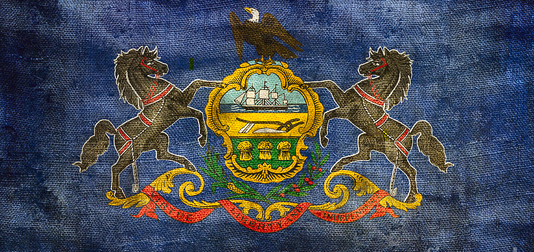
Pennsylvania is famous for being the “Keystone State,” but its identity was shaped long before the American Revolution. Unlike many other colonies that started as corporate ventures, Pennsylvania was born from a massive debt, a radical vision for religious freedom, and a name that the founder himself didn’t actually want.
Here is the history of what Pennsylvania was called before it became a state in 1787.
1. Lenapehoking (Pre-1600s)
Before European maps existed, the eastern half of Pennsylvania was part of Lenapehoking, the ancestral homeland of the Lenape (Delaware) people. The name signifies the “Land of the Lenape.” The western portions of the state were inhabited by the Susquehannock, Erie, and Monongahela peoples, each with their own distinct names for the geography they inhabited.
2. New Netherland and New Sweden (1609 – 1664)
The first Europeans to claim parts of Pennsylvania weren’t the English.
- The Dutch: Following Henry Hudson’s 1609 exploration, the Dutch claimed the Delaware Valley as part of New Netherland.
- The Swedes: In 1638, the Swedes established New Sweden along the banks of the Delaware River. Their first permanent settlement in Pennsylvania was New Gothenburg (located on Tinicum Island), which served as the first capital of any European government in what is now Pennsylvania.
The Dutch eventually conquered the Swedes in 1655, only to be ousted by the English in 1664.
3. The Province of Pennsylvania (1681 – 1776)
In 1681, King Charles II granted a massive tract of land to William Penn to settle a £16,000 debt the Crown owed to Penn’s father, Admiral William Penn.
- The Naming Dispute: William Penn originally wanted to call the land New Wales or simply Sylvania (Latin for “woods”). However, King Charles II insisted on Pennsylvania (Penn’s Woods) to honor the Admiral. The younger Penn, a humble Quaker, worried people would think he named it after himself, but the King’s decree stood.
- The Holy Experiment: Under Penn’s leadership, the province became a “Proprietary Colony” known for its “Great Law,” which guaranteed religious tolerance and fair treatment of Native Americans—radical ideas at the time.
4. The “Lower Counties” (1682 – 1704)
For a time, Pennsylvania was even larger than it is today. William Penn was granted the “Three Lower Counties” along the Delaware Bay. While they were technically part of Pennsylvania, the settlers there were culturally different and eventually demanded their own assembly. These “lower counties” eventually broke away to become the state of Delaware.
5. The Commonwealth of Pennsylvania (1776 – Present)
After the Declaration of Independence was signed in Philadelphia in 1776, Pennsylvania transitioned from a Proprietary Colony to a state. It officially adopted the title Commonwealth of Pennsylvania. Along with Virginia, Massachusetts, and Kentucky, it remains one of only four states to use the term “Commonwealth” instead of “State,” emphasizing a government based on the common consent of the people.
Summary Table
| Period | Name | Key Status |
| Pre-1600s | Lenapehoking | Homeland of the Lenape and other Indigenous nations. |
| 1638–1655 | New Sweden | Swedish colony along the Delaware River. |
| 1655–1664 | New Netherland | Dutch-controlled territory. |
| 1681–1776 | Province of Pennsylvania | Proprietary colony granted to William Penn. |
| 1776–Present | Commonwealth of Pennsylvania | The 2nd state to ratify the U.S. Constitution. |
Follow Us!