
Step Back in Time: Visiting Fort Ligonier to Learn About the French and Indian War
On a hill overlooking the charming town of Ligonier, Pennsylvania, stands a formidable wooden fortress, a faithful reconstruction of a post that was once the final link in a chain of forts stretching across the Pennsylvania wilderness. This is Fort Ligonier, a world-class historic site that offers one of the most immersive gateways into the 18th century and the pivotal conflict that defined a continent: the French and Indian War.
A visit here is not just a walk through a restored outpost; it’s a journey into the critical moments that forged a young George Washington, decided the fate of empires, and set the stage for the American Revolution.
A Fort That Never Fell: The History of Fort Ligonier
To understand the French and Indian War (part of the global Seven Years’ War), one must understand the struggle for the “Forks of the Ohio,” the strategic point in modern-day Pittsburgh where the Allegheny and Monongahela rivers meet to form the Ohio. French control of this point, marked by their stronghold at Fort Duquesne, was a direct threat to British colonial expansion.
In 1758, the British launched a massive campaign led by General John Forbes to seize Fort Duquesne. Fort Ligonier, then known as the “Post at Loyalhanna,” was built as the crucial staging ground for this expedition. It was a massive undertaking, housing over 5,000 troops, supplies, and artillery—at the time, it was the second-largest community in Pennsylvania, second only to Philadelphia.
Before the British could launch their final assault, a combined force of French and Native American allies attacked Fort Ligonier on October 12, 1758. The garrison, under the command of Colonel James Burd and with a young George Washington present, successfully repelled the attack. This victory was a critical turning point. It demoralized the French, who, facing a massive and well-supplied British army, abandoned and burned Fort Duquesne just a few weeks later.
The British claimed the Forks of the Ohio, naming the new post “Fort Pitt.” Fort Ligonier had served its purpose perfectly; it was the fort that never fell and the key to winning the war in the west.
What to See and Do at Fort Ligonier
A visit to Fort Ligonier is a comprehensive experience, divided into two main parts: the meticulously reconstructed fort and the world-class museum.
1. Explore the Reconstructed Fort
Walking through the gates of the inner fort feels like stepping directly into 1758. The reconstruction is not a replica but a full-scale recreation built on the original footprint, guided by original 18th-century maps and extensive archaeological work.
Visitors can freely explore:
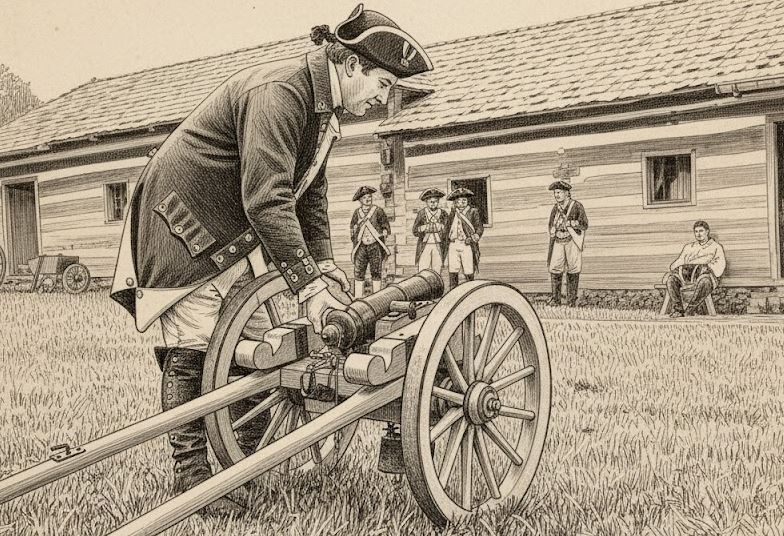
- The Artillery Park: See the impressive collection of 18th-century artillery, including cannons, mortars, and howitzers, all positioned to defend the fort.
- Officers’ Quarters: This building includes the Officers’ Mess and the quarters of General Forbes, offering a glimpse into the “comforts” afforded to the campaign’s leadership.
- Barracks and Commissary: See the simple, rough-hewn bunks where soldiers slept and the storehouse that held the vital provisions for the army.
- The Outer Defenses: Walk the grounds to understand the fort’s layered defenses, from the outer retrenchments to the inner bastions designed for flanking fire.
Living history programs and reenactors are frequently on-site, demonstrating everything from musket drills and blacksmithing to 18th-century medicine, adding a powerful layer of authenticity to the experience.
2. Tour the World-Class Museum
Adjacent to the fort is a modern museum that is far more than a simple visitor center. It is an internationally renowned institution that tells the complete story of the French and Indian War.
Key exhibits include:
- The French and Indian War Gallery: This extensive gallery uses original artifacts, maps, and detailed dioramas to explain the global context of the war and the specific events at Fort Ligonier. The collection of 18th-century artifacts, many excavated on-site, is one of the finest in existence.
- The George Washington Gallery: Fort Ligonier was a crucial chapter in the early career of George Washington, who served here as a young Virginia colonel. This gallery explores his experiences, his difficult relationship with General Forbes, and his narrow escape from a friendly-fire incident. The centerpiece of the collection is a stunning pair of saddle pistols, a gift from the Marquis de Lafayette to Washington, which he cherished for his entire life.
- The Art Gallery: An impressive collection of 18th- and 19th-century art features portraits of the key figures of the era, including King George III, Lord Ligonier (the fort’s namesake), and a romanticized portrayal of a young Washington.
Planning Your Visit
A visit to Fort Ligonier is an easy and rewarding day trip, located in the beautiful Laurel Highlands.
- Location: 200 South Market Street, Ligonier, PA 15658
- Hours: The fort and museum are typically open daily from early April through the Thanksgiving weekend. The museum alone remains open on weekends during the winter months (December–March).
- Time: Plan to spend at least two to three hours to fully experience both the fort and the museum exhibits.
- Events: Look for special events, including battle reenactments and the popular “Fort Ligonier Days,” a town-wide festival held every October.
Follow Us!