
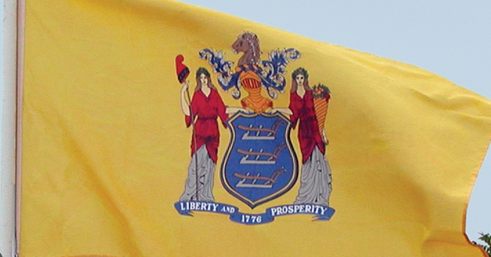
Before it was the “Garden State,” New Jersey was a land of constant transition. It holds the unique distinction of being a territory that changed hands multiple times between European powers before finally becoming the third state to ratify the U.S. Constitution in 1787.
Here is the history of what New Jersey was called before it became a state.
1. Scheyichbi (Pre-1600s)
Long before European maps were drawn, the land was known as Scheyichbi (pronounced Shay-ick-bee) by the native inhabitants. This name, used by the Lenape people, roughly translates to “land of the edge of the water” or “place of the flowing water,” perfectly describing the peninsula nestled between the Delaware River and the Atlantic Ocean.
2. New Netherland (1609 – 1664)
The first Europeans to claim the area were the Dutch. Following Henry Hudson’s 1609 voyage, the region became part of the vast province of New Netherland.
- The Dutch Influence: They established small trading outposts and settlements, such as Pavonia (modern-day Jersey City) and Bergen (the first permanent European settlement in NJ, established in 1660).
- New Sweden: For a brief period (1638–1655), the southwestern part of the state along the Delaware River was claimed as New Sweden, before the Dutch forcibly took it back.
3. The Province of New Jersey (1664 – 1674)
In 1664, the English seized the territory from the Dutch. King Charles II granted the land to his brother, the Duke of York, who then gave it to two loyal friends: Sir George Carteret and Lord Berkeley of Stratton.
- The Name: It was named New Jersey in honor of the Isle of Jersey in the English Channel, where Carteret had served as governor and famously defended the monarchy.
4. East Jersey and West Jersey (1674 – 1702)
Internal disputes and debt led the province to be split into two separate colonies with a diagonal border running through the center of the state.
- West Jersey: Governed largely by Quakers (including William Penn), it became a haven for religious freedom and had its capital in Burlington.
- East Jersey: Remained under the influence of Carteret’s heirs and maintained closer ties to New York, with its capital in Perth Amboy.
5. The Royal Colony of New Jersey (1702 – 1776)
Because governing two separate “Jerseys” proved inefficient and chaotic, the proprietors surrendered their right to rule back to the British Crown. In 1702, the two halves were reunited into a single Royal Colony. Interestingly, for the first few decades of this period, New Jersey shared the same Royal Governor as New York, though it maintained its own local assembly. It didn’t get its own dedicated governor until 1738.
Summary Table
| Period | Name | Key Status |
| Pre-1600s | Scheyichbi | Home of the Lenape (Delaware) people. |
| 1609–1664 | New Netherland | Dutch territory (including New Sweden). |
| 1664–1674 | Province of New Jersey | Granted to Carteret and Berkeley. |
| 1674–1702 | East & West Jersey | Divided into two separate Quaker/Proprietary colonies. |
| 1702–1776 | Royal Colony of New Jersey | Reunited under direct British Crown rule. |
| 1787–Present | State of New Jersey | The 3rd state to join the Union. |
Follow Us!